
Launch of the Longitudinal Education Outcomes Northern Ireland (LEO NI) Dataset
Category: ADR Northern Ireland
24 November 2026
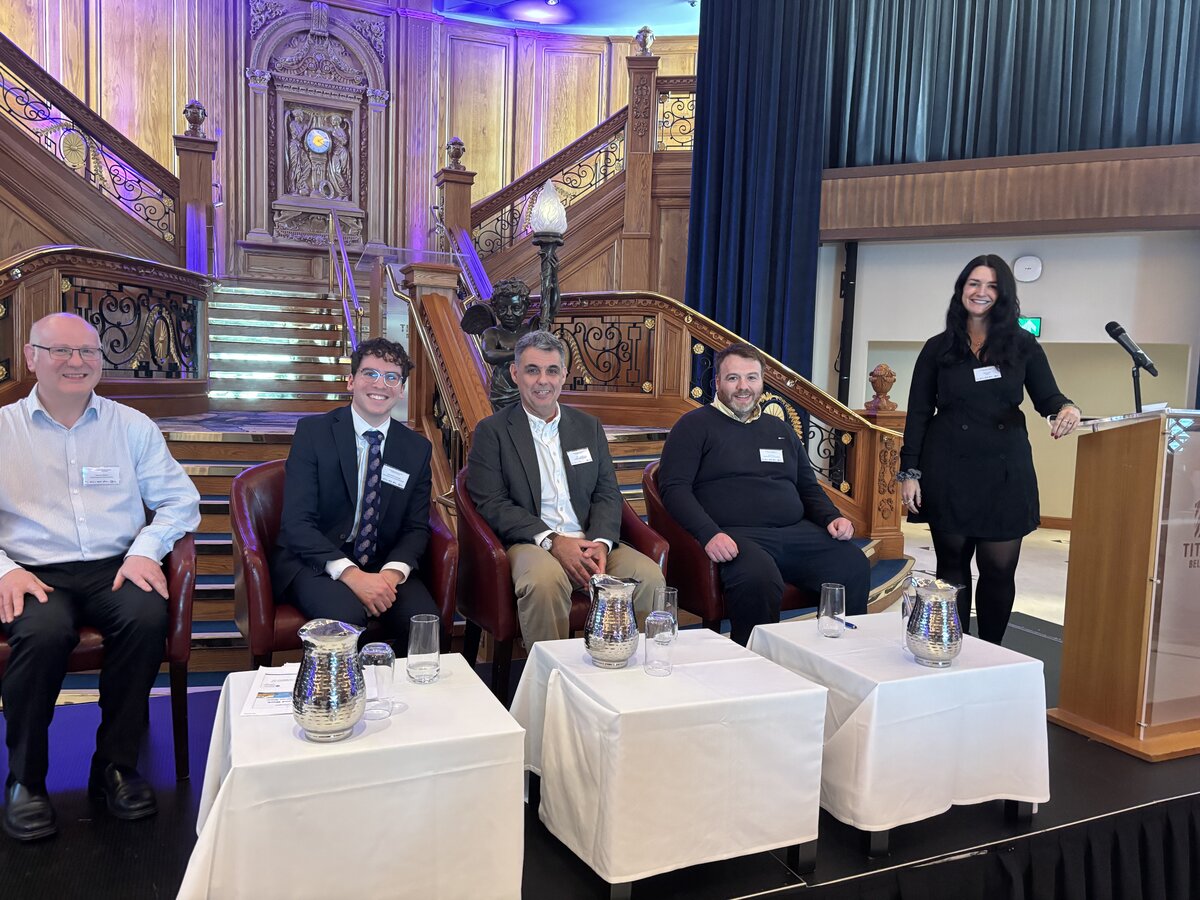
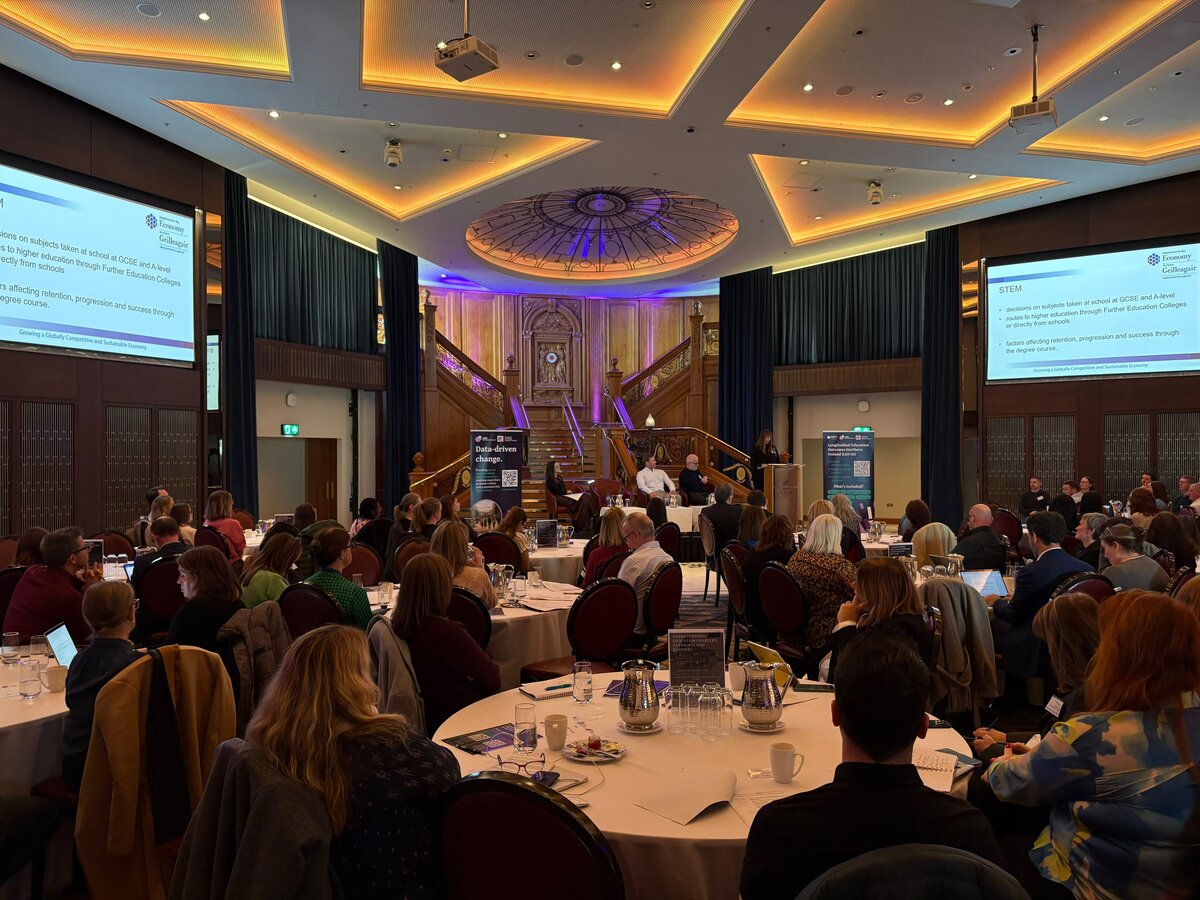
On 4 November 2026, the Northern Ireland Statistics and Research Agency (NISRA), part of Administrative Data Research Northern Ireland (ADR NI), hosted the in-person launch of the Longitudinal Education Outcomes Northern Ireland (LEO NI) dataset at the Titanic Centre, Belfast.

The event marked an important achievement for NISRA, the Department for the Economy and the Department of Education and showcased the potential of the LEO NI dataset to an audience from across government, academia and the wider research community. Attendees gathered to learn how linked administrative data can help answer some of the most important questions facing education, skills and economic policy.
LEO NI is the first dataset of its kind in Northern Ireland. Developed through a partnership between NISRA, the Department for the Economy and the Department of Education, it securely links seven major education and training datasets, bringing together information on more than 540,000 individuals and almost 5 million linked records. This creates, for the first time, a single resource that allows researchers to follow educational journeys from secondary school through further education, higher education, training and apprenticeships.
Opening the event, Ian Snowden, Permanent Secretary at the Department for the Economy, described LEO NI as a significant milestone for Northern Ireland. He highlighted the opportunities the dataset presents for evidence-based policymaking, research and public good, and emphasised the importance of making greater use of administrative data to better understand learner journeys, skills development and long-term outcomes.
The keynote address was delivered by Dr Emma Gordon, Director of ADR UK, who highlighted how linked administrative data is transforming the UK's research landscape and helping governments better understand some of society's most complex challenges. A clear message emerged throughout the event: people's lives do not happen neatly within individual datasets or government departments. By securely linking data, researchers can move beyond isolated snapshots and begin to understand the full story.
As one speaker put it, the aim is to move from asking "what happened in school?" to understanding "what happened afterwards?".
The programme also featured contributions from speakers across NISRA, the Department for the Economy and the Department of Education, reflecting the collaborative partnership that underpins LEO NI. Presentations explored the development of the dataset, the policy and research questions it has been designed to address, and the safeguards that enable approved researchers to access the data securely. Janis Scallon, Director of Further Education and an ADR NI Ambassador, also highlighted the value of administrative data in supporting evidence-based decision-making and improving outcomes for learners.
Presentations demonstrated how LEO NI can help answer questions that have previously been difficult, or impossible, to explore. How do educational pathways differ for young people with Special Educational Needs? What influence does deprivation have on progression through education and training? Which routes are most effective in supporting participation in STEM subjects? And which education and skills interventions deliver the greatest long-term impact?
The event also showcased some of the first research projects being developed using LEO NI, presented by researchers and analysts from government, academia and NISRA. These include studies examining post-school transitions for young people with Special Educational Needs, widening participation in higher education, pathways into training programmes such as Skills for Life and Work, and the factors associated with progression into STEM qualifications.
To bring the possibilities of LEO NI to life, speakers highlighted research already being conducted elsewhere in the UK and Ireland using similar linked education datasets. From understanding how educational experiences influence future employment outcomes to identifying barriers faced by disadvantaged learners, the examples demonstrated how linked, longitudinal data can uncover insights that would otherwise remain hidden. For many attendees, these case studies offered a glimpse of what the research community could achieve through the new LEO NI resource.
Several speakers highlighted the importance of moving beyond assumptions and anecdotal evidence. By connecting previously separate datasets, LEO NI can provide a much richer understanding of learner journeys, helping policymakers identify where interventions are working, where inequalities emerge and where support may be needed most. Central to many of the discussions was a simple but important question: who is being left behind? The ability to answer that question is one of the key strengths of linked, longitudinal data, helping ensure that policies and interventions reach those who need them most.
Discussions also looked ahead to the future development of the LEO NI dataset. Planned enhancements include the addition of earnings and benefits data, helping researchers understand how educational experiences translate into employment and economic outcomes later in life. Further potential developments could provide an even more comprehensive picture of the factors that shape people's opportunities and life chances.
A recurring theme throughout the day was that the true value of LEO NI lies not in the dataset itself, but in what it makes possible. The success of the resource will ultimately be measured by the evidence it generates, the insights it delivers and the policies it helps to inform. As one presenter noted, the ambition is to transform "data into evidence, evidence into decisions, and decisions into better outcomes".
With approximately 160 attendees from across government, academia and the research community, the launch generated enthusiasm and interest in future collaboration. The event demonstrated both the appetite for Northern Ireland-specific evidence and the potential for LEO NI to become one of Northern Ireland's most important strategic research assets.
The launch may mark the end of one project, but it is also the beginning of an exciting new chapter. As researchers, analysts and policymakers begin to explore the possibilities offered by LEO NI, the dataset promises to provide valuable new insights into educational pathways, skills development and learner outcomes for years to come.